
This is not medical advice. In an emergency, call 911.
Why a Church Has a Medical Response Team
A church gathers people of every age, often for hours at a time. Sooner or later someone feels unwell, falls or needs help.
A medical response team means that when it happens, volunteers already know who does what. Nobody has to wonder whether someone has called 911.
I served on church safety teams, and the responses that went smoothly were the ones where each person had one clear job. This page covers how to organize those jobs. It is part of your wider church security planning guide.
How the Team Is Organized
Name a person for each job below, plus a backup. In a small church one person may hold two jobs, but write down who it is.
- The caller: calls 911 and stays on the line with the dispatcher.
- The kit and AED runner: brings the first-aid kit and the AED to the person who needs help.
- The door person: meets EMS at the door, brings them in and clears a path through the building.
- The privacy person: keeps the area private and quiet, and gently moves onlookers back.
- The recorder: writes the incident report afterward.
- The lead responder: the volunteer with the person, a volunteer who has completed a recognized first-aid, CPR and AED course.
The roles belong in your written roster. See church security team roles for how to give each person a job.
Training Through Recognized Courses
Lead responders are volunteers who have completed a recognized first-aid, CPR and AED course. This page does not teach those skills.
Record each volunteer's course and its renewal date, and renew when it comes due.
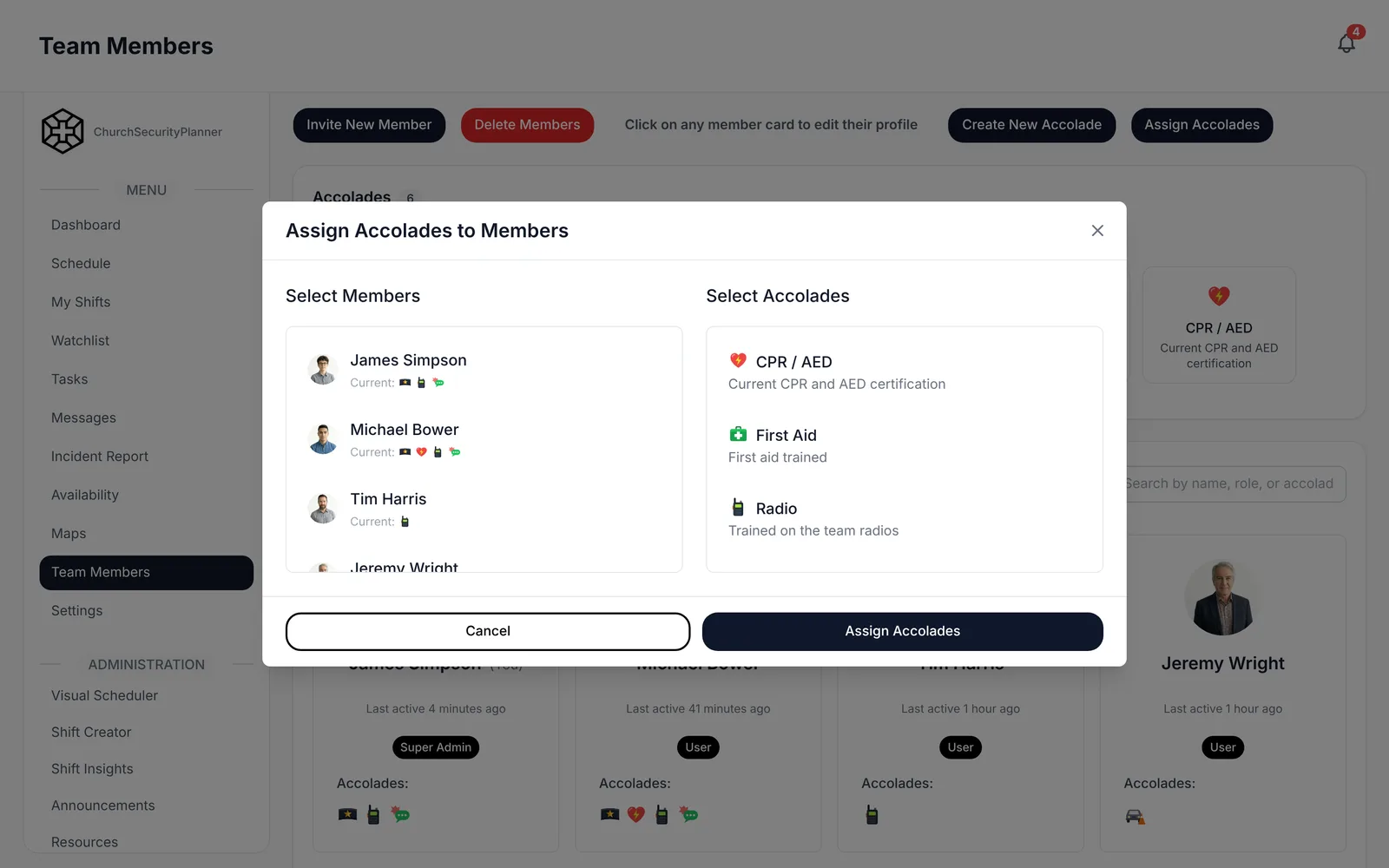
In ChurchSecurityPlanner, accolades record a volunteer's trainings and certifications, with renewal dates.
Not everyone on the response team needs a course. Callers, door people and recorders do their jobs without one.
For a year of training dates, see the church safety team training plan.
Response Checklist: Who Does What
Put this on a card for each responder. It lists jobs, not medical steps.
This is an example to adapt to your church.
- The first person to notice calls the team lead or sends a team message.
- The caller dials 911 and gives the address and the room.
- The kit and AED runner brings both to the room.
- The lead responder stays with the person and follows their training.
- The door person goes to the entrance EMS will use and waits there.
- The door person clears a path and holds elevators or doors if needed.
- The privacy person keeps onlookers back and the area quiet.
- A team member contacts the person's family, if church policy says to.
- When EMS arrives, the lead responder hands over and steps back.
- The recorder writes the incident report the same day.
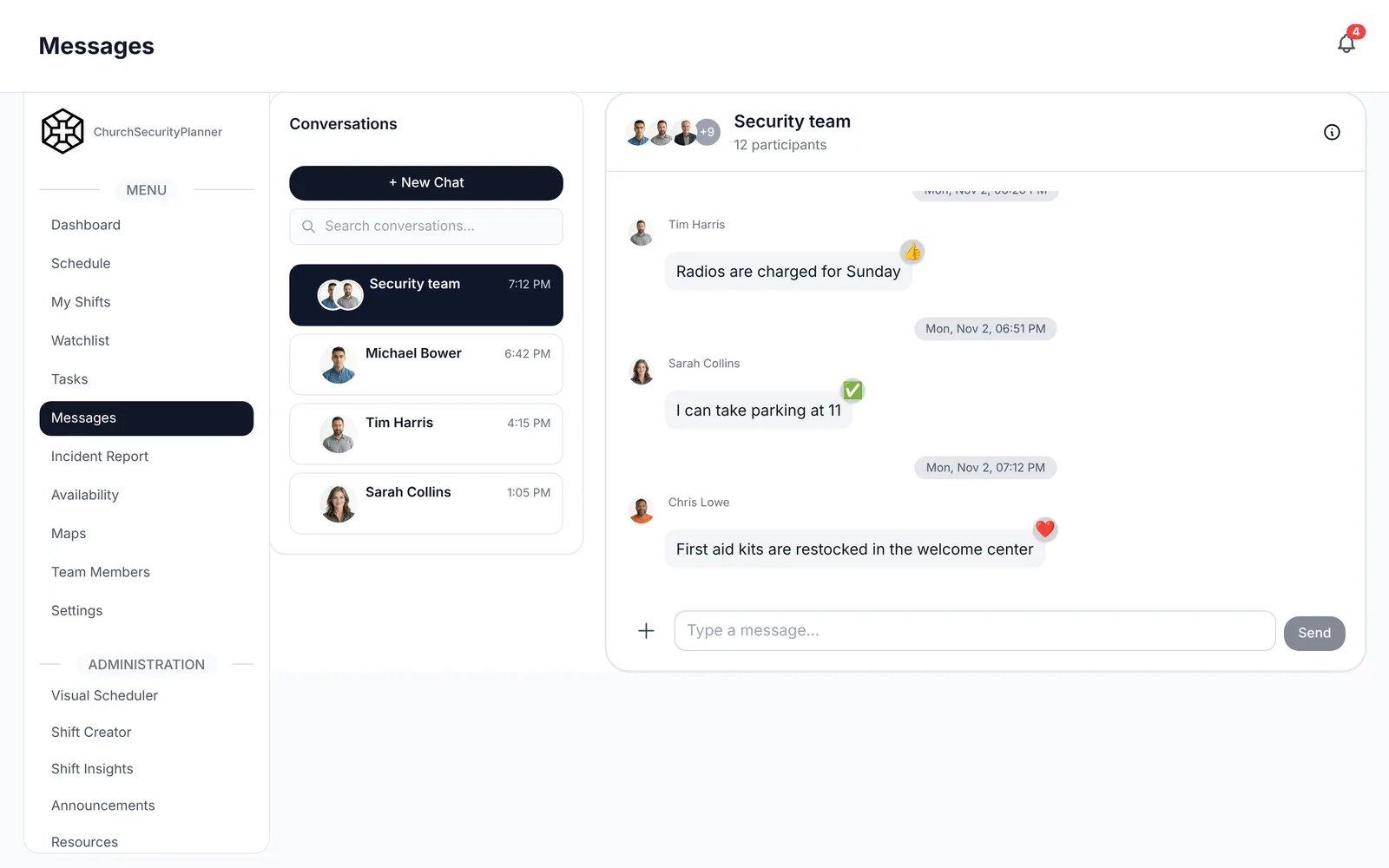
In ChurchSecurityPlanner, team messaging sends a message to the group with a push notification, so the right people see it fast.
Practice this walk-through twice a year. A short run-through in the room where you meet shows quickly who is unsure of their job.
Monthly First-Aid Kit and AED Check
Give this to one volunteer each month, with a second person who can cover. Keep a simple record sheet.
This is an example to adapt to your church.
- AED status indicator shows the device is ready: [yes or no]
- Pad expiration date: [date]
- Battery expiration date: [date]
- First-aid kit restocked, and anything used replaced: [yes or no]
- Kit and AED are easy to find: [yes or no]
- Checked by: [name] on [date]
Follow the maker's instructions for your AED and kit. If the indicator shows a problem or an item has expired, tell the team lead right away.
Privacy and Medical Details
Share medical details only with the people who need them, as your church's policy says. The recorder writes what the team did and saw.
Do not post names or conditions in a group message. Say the room and what is needed. See church safety team policy and procedures.
A written record is useful. The church incident report template shows what to capture.
Trenton J. Reagan is the founder of ChurchSecurityPlanner, a former youth pastor and church security team member. He was trained in church protection protocols by law enforcement and military professionals and has a lifelong background in firearms training and tactical preparedness. ChurchSecurityPlanner was built in response to a direct request from his father, Pastor Clint Reagan of Calvary Chapel Knoxville — a congregation of 5,000 — who needed a comprehensive tool to manage his security teams.