
Why Write a Training Plan
People do what they have practiced. A volunteer who has never walked the evacuation route will not find it on a loud Sunday morning.
When I served on a church safety team, training happened when someone remembered it. A written plan puts each session on a date, with a name next to it.
The plan below covers a safety team's core skills for one year. This plan does not cover firearms or use of force. That is a decision for your church's leadership.
A 12-Month Training Calendar
Adjust the order to fit your church year. Put the dates in the team calendar so nobody is surprised.
This is an example to adapt to your church.
- January: Orientation for new volunteers. Walk the building, meet the team lead and read the team's written policies.
- February: First aid, CPR and AED, through a recognized course.
- March: De-escalation and verbal skills: listening and knowing when to call the team lead.
- April: Walk through the emergency action plan, post by post, and update any names or phone numbers that changed.
- May: Severe weather drill. Practice moving people to your shelter areas and who checks each room.
- June: Renewals. Check the training log and book any course that is due.
- July: Orientation again for summer volunteers and anyone who joined since January.
- August: Evacuation and reunification drill, including how children's areas and families are reunited.
- September: Radio and messaging practice. Everyone sends and answers a test message and learns the plain words your team uses.
- October: Review recent incident reports together, with names kept private, and note what to change.
- November: Refresher on first aid and AED locations, and a second look at the emergency action plan before the holidays.
- December: Year-end debrief. Ask what worked, what was awkward and what to train next year.
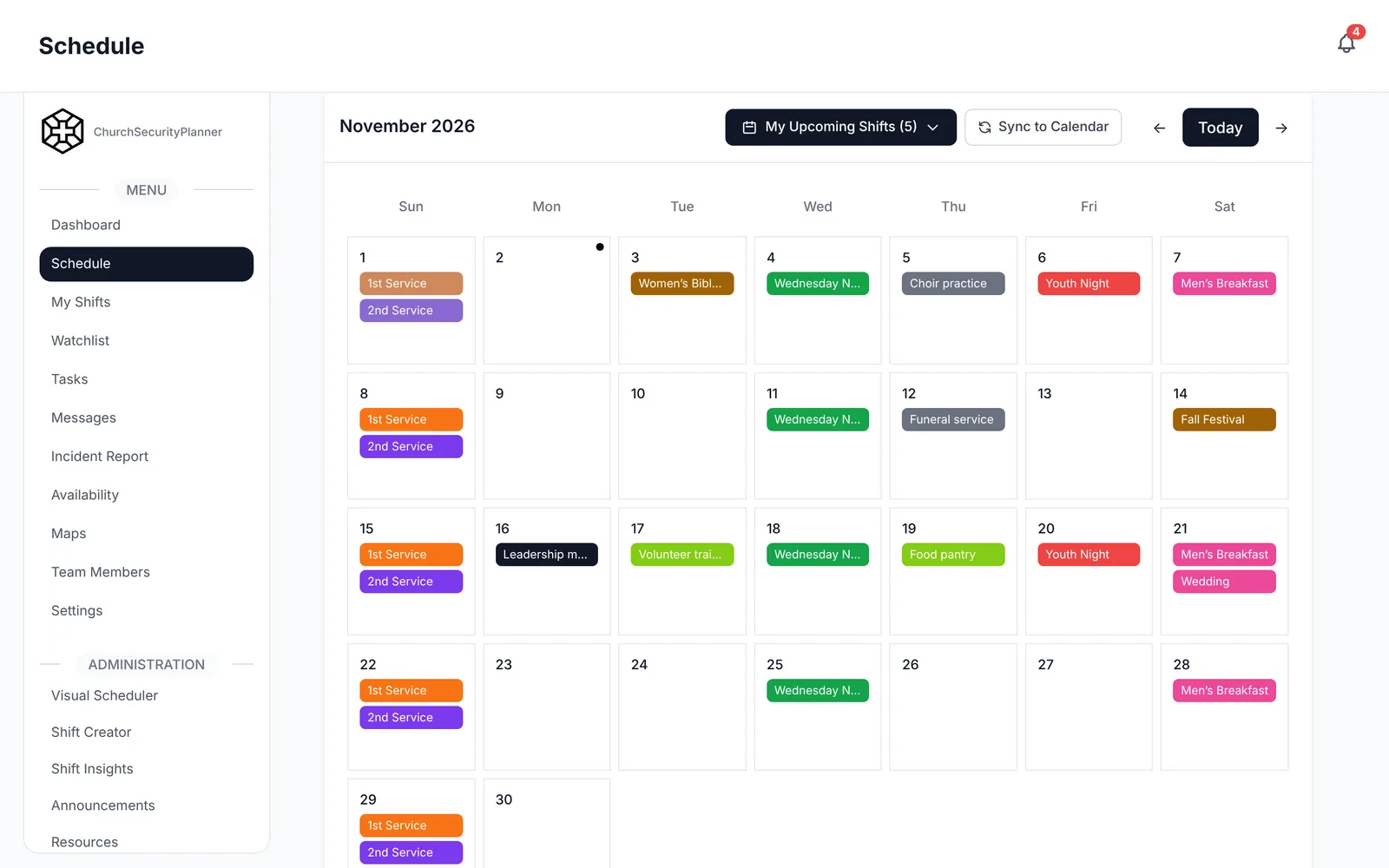
The plan you drill against should be written down. See the church security plan template for an outline.
Is Professional Church Safety Training Worth It?
For medical skills, a recognized first-aid, CPR and AED course is a good place to start. Each volunteer who completes one has a renewal date for the course.
That date matters. Someone has to track it and book the renewal.
Courses do not teach your building. Your own drills do that: where the exits are, who calls whom and what your team says on the radio.
Most teams need both. Use recognized courses for medical skills and in-house drills for habits.
Training Log Template
Copy this into a document or spreadsheet and keep one entry per course per volunteer. You can also print this page.
This is an example to adapt to your church.
- Volunteer name: [name]
- Course: [for example, CPR, first aid and AED]
- Date completed: [date]
- Course renewal date: [date, or "none"]
- Renewal booked: [yes or no, and date]
- Notes: [anything the next team lead should know]
Review the log every quarter. A renewal date you notice in June is easier to handle than one you find out about in September.
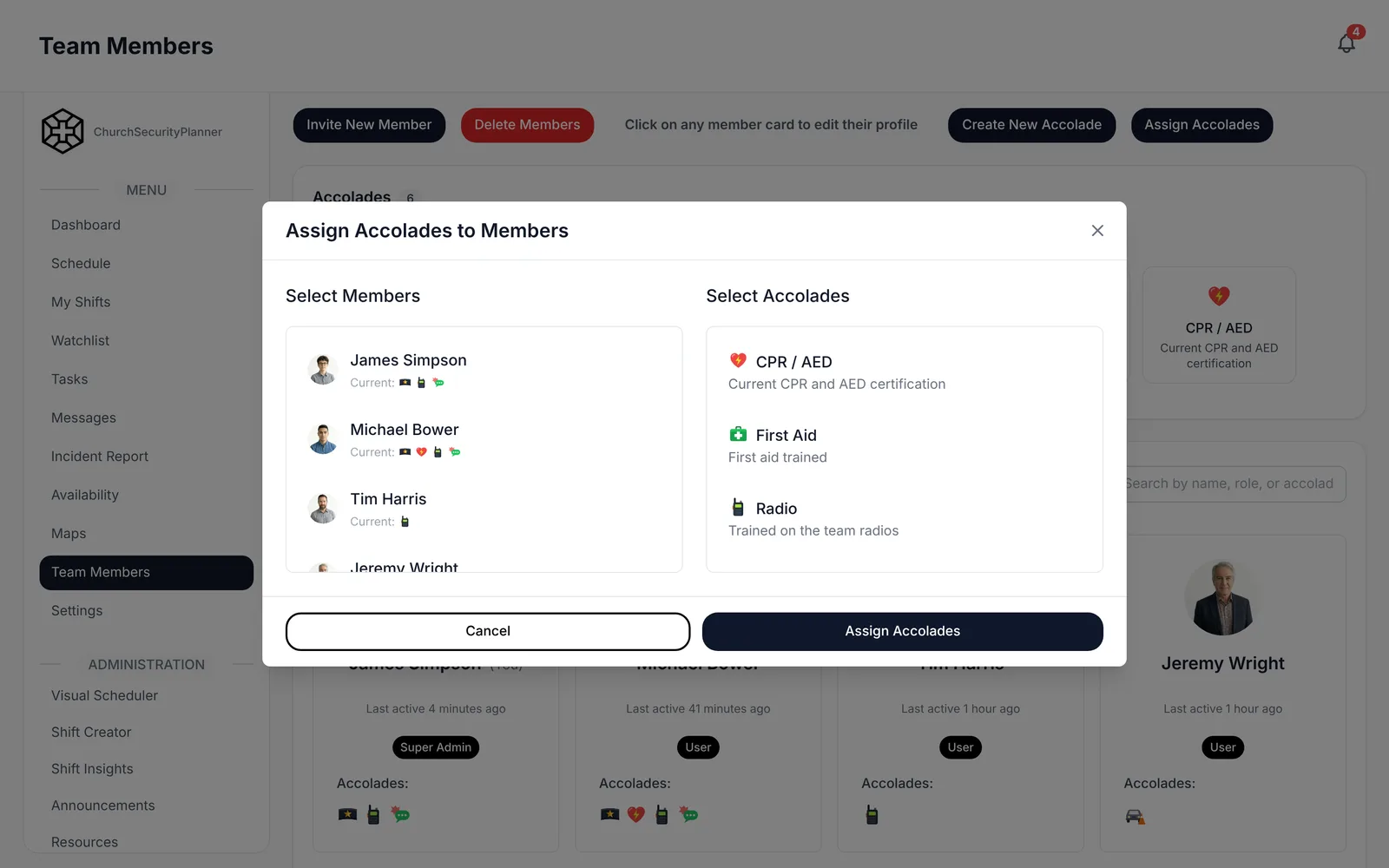
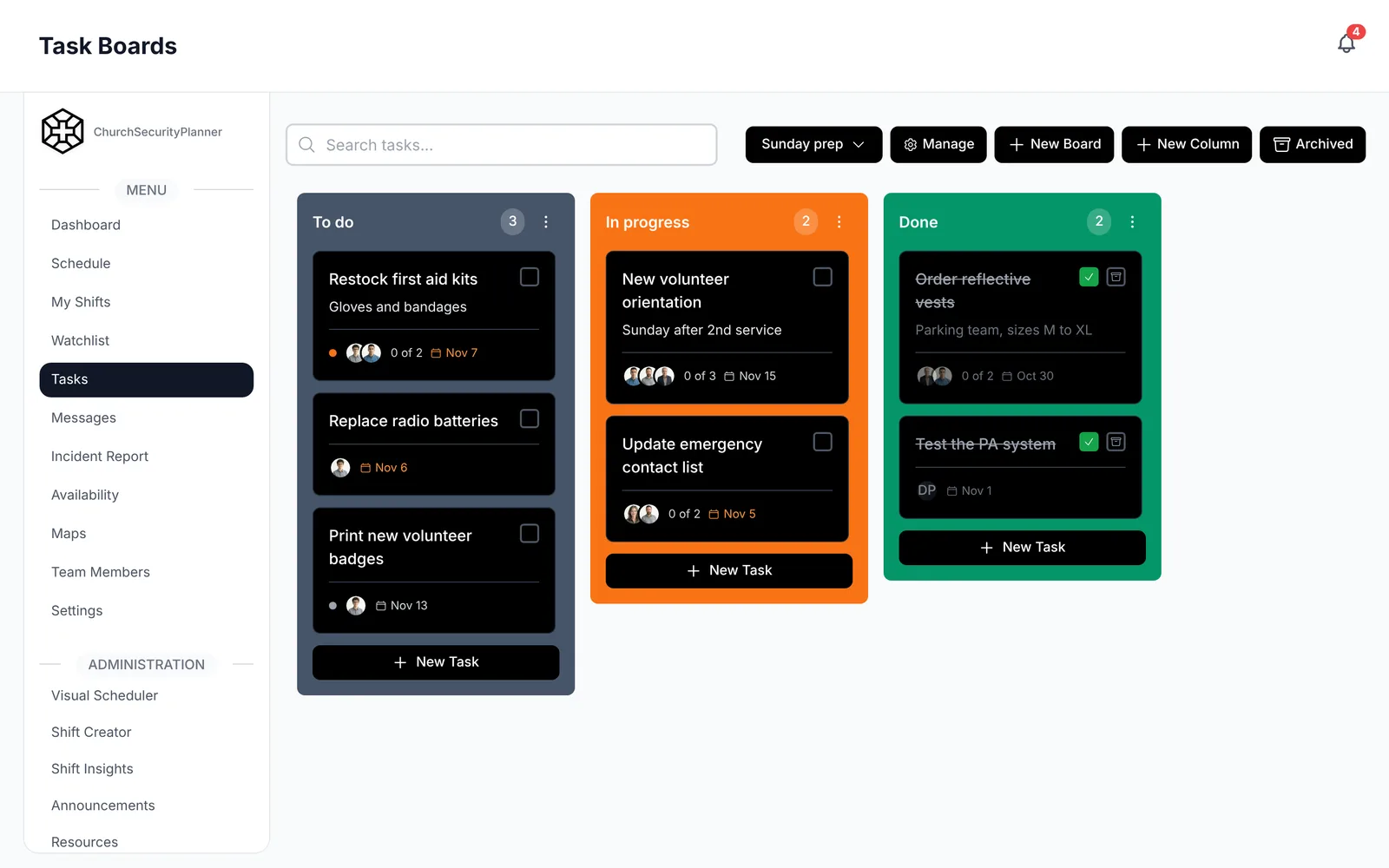
In ChurchSecurityPlanner, accolades record a volunteer's trainings and certifications, and a role on a shift can require one. The quarterly log review can be a task assigned to a volunteer.
Who Runs the Training
Name one person to own the calendar, usually the team lead or a training coordinator. Their job is to schedule sessions, take attendance and watch renewal dates.
Keep sessions short. Thirty to forty-five minutes after a service, with coffee, gets better attendance than a Saturday morning nobody wants.
After each drill, write down two things that went well and one thing to change. Add those notes to your policies. For the wording of those rules, see church safety team policy and procedures, and for who does what, see church security team roles.
New volunteers should shadow an experienced one for a few services before serving on their own. A roster and a schedule template help you place them.
Trenton J. Reagan is the founder of ChurchSecurityPlanner, a former youth pastor and church security team member. He was trained in church protection protocols by law enforcement and military professionals and has a lifelong background in firearms training and tactical preparedness. ChurchSecurityPlanner was built in response to a direct request from his father, Pastor Clint Reagan of Calvary Chapel Knoxville — a congregation of 5,000 — who needed a comprehensive tool to manage his security teams.